Halkidiki Mount Athos
• General info • Tours & Activities • Map • Members Photos (215) • Greeka Photos (5) • Write a review!
Location: Ouranoupolis
Important Note: Women and girls are prohibited from going to Mount Athos. Only men and boys are allowed.
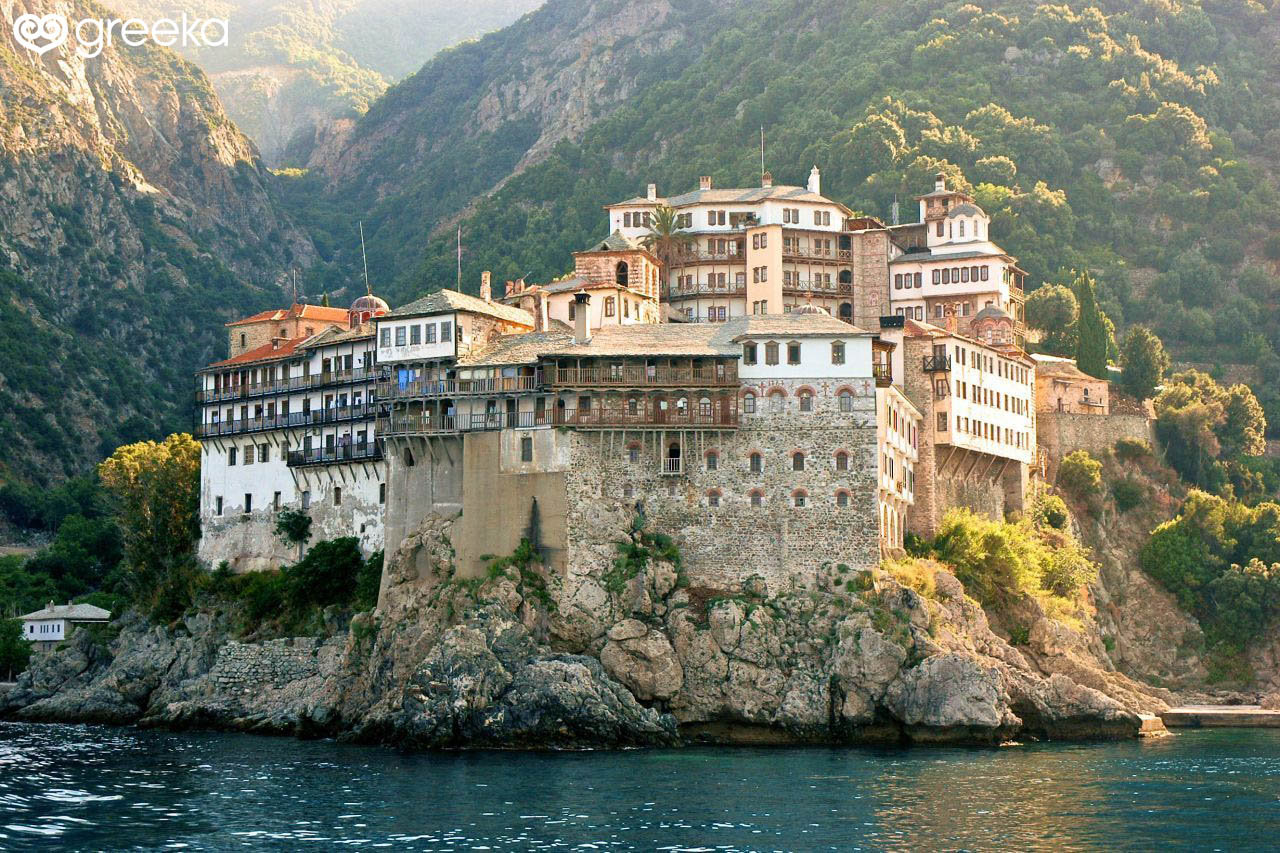
Mount Athos, also called Hagion Oros or Holy Mountain, is a UNESCO World Heritage Site. It is a self-governed part of the Greek State, administered by the Ecumenical Patriarch of Constantinople. Mount Athos consists of 20 Orthodox monasteries and is also known as the Autonomous Monastic State of the Holy Mountain. It stands on the eastern peninsula of Halkidiki.
Life in Mount Athos is simple. The monks believe that the way of man to find God is through solitude, prayer, exercise, obedience to the Spiritual Father, service, and fasting. They eat a small quantity of food every day, mainly bread and olives, because they want to exercise their body through deprivation. Moreover, they stay in the monastery cells or in caves, pray to God, and do agricultural work. Since both monks and visitors lead a simple life, no modern facilities can be found around.
Top Tours and activities
-
![Mt. Athos Glassbottom tour 1]()
![Mt. Athos Glassbottom tour 2]()
![Mt. Athos Glassbottom tour 3]()
Mt. Athos Glassbottom tour
Book nowfrom € 25.00Category: Day Trips, Shore Excursions3 hours MapGet on board and enjoy a cruise to Mount Athos with a fantastic glass-bottom boat! Witness the beauty of Athos from afar, learn key facts about its long history, and sail through the gulf while looking right inside the sea!


More about Mount Athos
The origins of the area's name vary. One source says that while the Gods and the Giants were fighting, the Giant Athos threw a massive rock at the god Poseidon, which fell into the sea and became Mount Athos. Another legend has it that while the Virgin Mary and Evangelist John were on their way to Cyprus, a great storm forced them to temporarily dock in the harbor where the Monastery of Iviron is found today. Mary was so amazed by the beauty of the place and asked her Son to offer her the whole area as a present. Thereafter, Mount Athos is called the Garden of the Virgin Mary. The first monks to inhabit the place arrived at Mount Athos in 5 AD and found this area ideal for worshiping God, free from the distractions of everyday life.
The governing body of the Holy Mountain is the Holy Community (Iera Kinotita), which consists of representatives from the 20 Holy Monasteries. 17 out of the 20 monasteries are Greek, while there are also a Serbian, a Bulgarian and a Russian one. Apart from the monasteries, there are 12 sketes (smaller communities of monks) and many solitary hermitages.
The monasteries are storehouses of rich Byzantine history. You can see paintings from 13 AD, music manuscripts from the Byzantine era, marble sculptures of columns, turrets, chalices, icon screens and exquisite miniatures in gold and silver dating back to the 12th century. Approximately one-quarter of all the Greek works in the world are kept there in the form of books and handwritten manuscripts, numbering around 15,000 valuable items.
How to visit Mount Athos
Mount Athos is approached by ferry from Ouranoupolis or Ierissos. Reaching and entering Mount Athos is not that simple, though; there is a procedure that has to be followed beforehand so that someone can get in and stay there. First, those interested will need to issue a ‘diamonitirion’, a document that acts as a permit to enter Mount Athos and has a maximum validity of 4 days. As the number of visitors per day is limited, it is advisable to contact the Mount Athos Pilgrims' Office as early as possible (2 months in advance is considered a good time). You will be asked for official identification and a fee (25 euros for Orthodox Christians and 30 euros for people of other religions). As you will have to indicate which monasteries you wish to visit, we recommend contacting the monasteries first and the Pilgrims' Office afterwards. Finally, before you depart for Mount Athos on the day you have agreed, you will receive your certificate from the Pilgrims' Office in Ouranoupolis.
More documentation is requested from non-Greek citizens. Apart from their passport, foreign visitors must have a letter of recommendation from their embassy in Athens or consulate in Thessaloniki. Another required document for them is the entry permit from the Administration Division of Church Affairs at the Greek Foreign Ministry in Athens or the Administration of Foreign Affairs at the Ministry of Northern Greece in Thessaloniki.


